
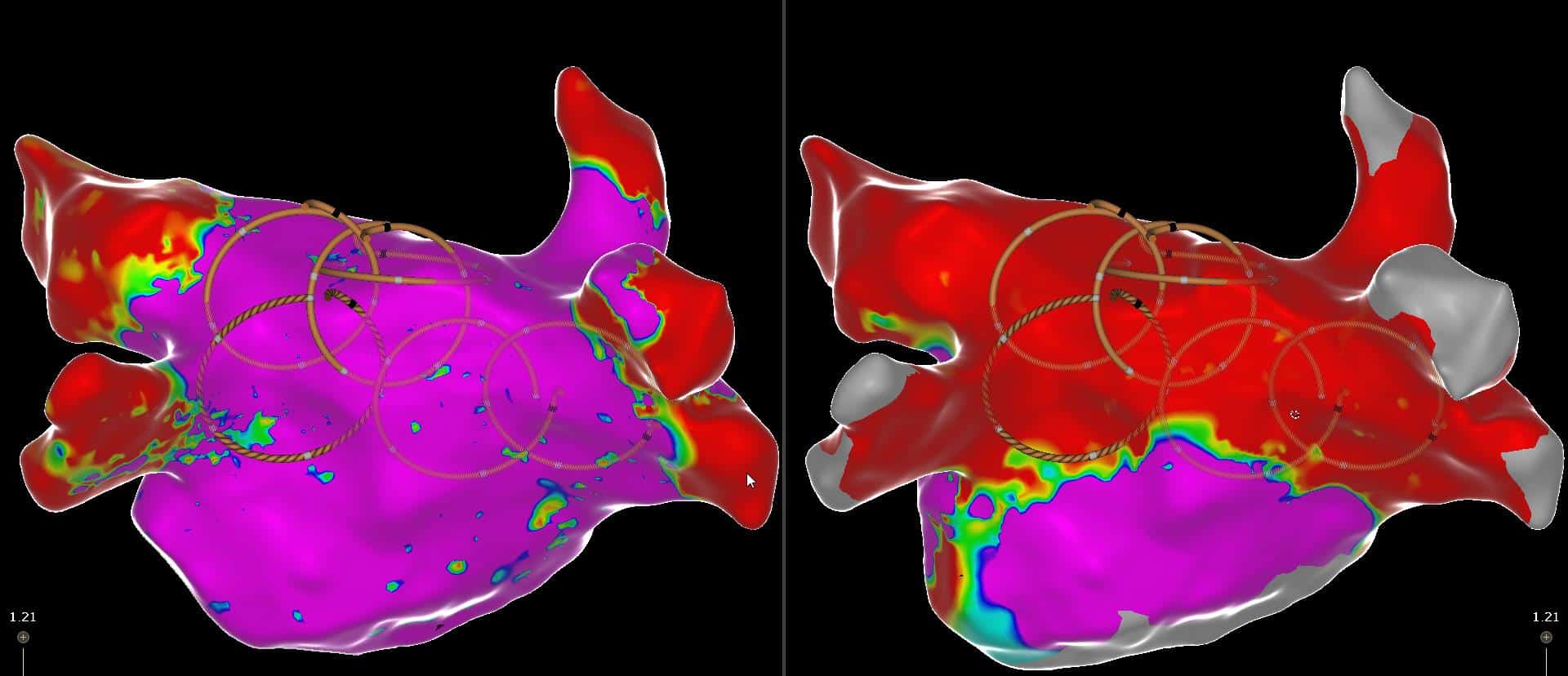
At a first-time ablation, adding posterior wall isolation (PWI) to pulmonary vein isolation (PVI) hasn’t been shown to reduce recurrence. The main randomised trials (CAPLA, PIFPAF-PFA and PIVoTAL) were all neutral on their primary endpoint. For the patient above, with four durably isolated veins and AF anyway, nobody knows, because no completed randomised trial has tested PWI against doing nothing, a sham or drugs in that patient.
That statement is not the same as saying there’s evidence against PWI in the patient where we actually use it. Everyone accepts that PVI is the cornerstone of AF ablation, and nobody disputes that.
The trials people quote when they say PWI “doesn’t work” asked a different question: should PWI be added at a first ablation? They did not ask what to do when the veins are already isolated and the AF is still there.

Who was in the posterior wall isolation trials. Sources listed under the table.
Granted this is a huge selection bias because it’s patients who came to the lab because they had persistent AF despite an attempted posterior wall isolation and it’s not mandated mapping in all patients. However if this is anything at all, it’s a signal that posterior wall isolation is actually really difficult with current technologies.
This is because of the increased thickness of the LA roof, the epicardial septopulmonary bundle, and also the intramural adipose tissue, which separate the endo- and epicardial layers at the left atrial dome (discussed in the septopulmonary bundle box).
We go through the trials, the anatomy and the practical challenges of posterior wall isolation in EP in Practice – Program 5: Atrial Fibrillation.
Thanks for tuning in :)
Cheers Mitch & CPiP Team